Dance is a workout for the body. And the brain.
Say the word dance, and it’s interesting how many different things first come to people’s minds.
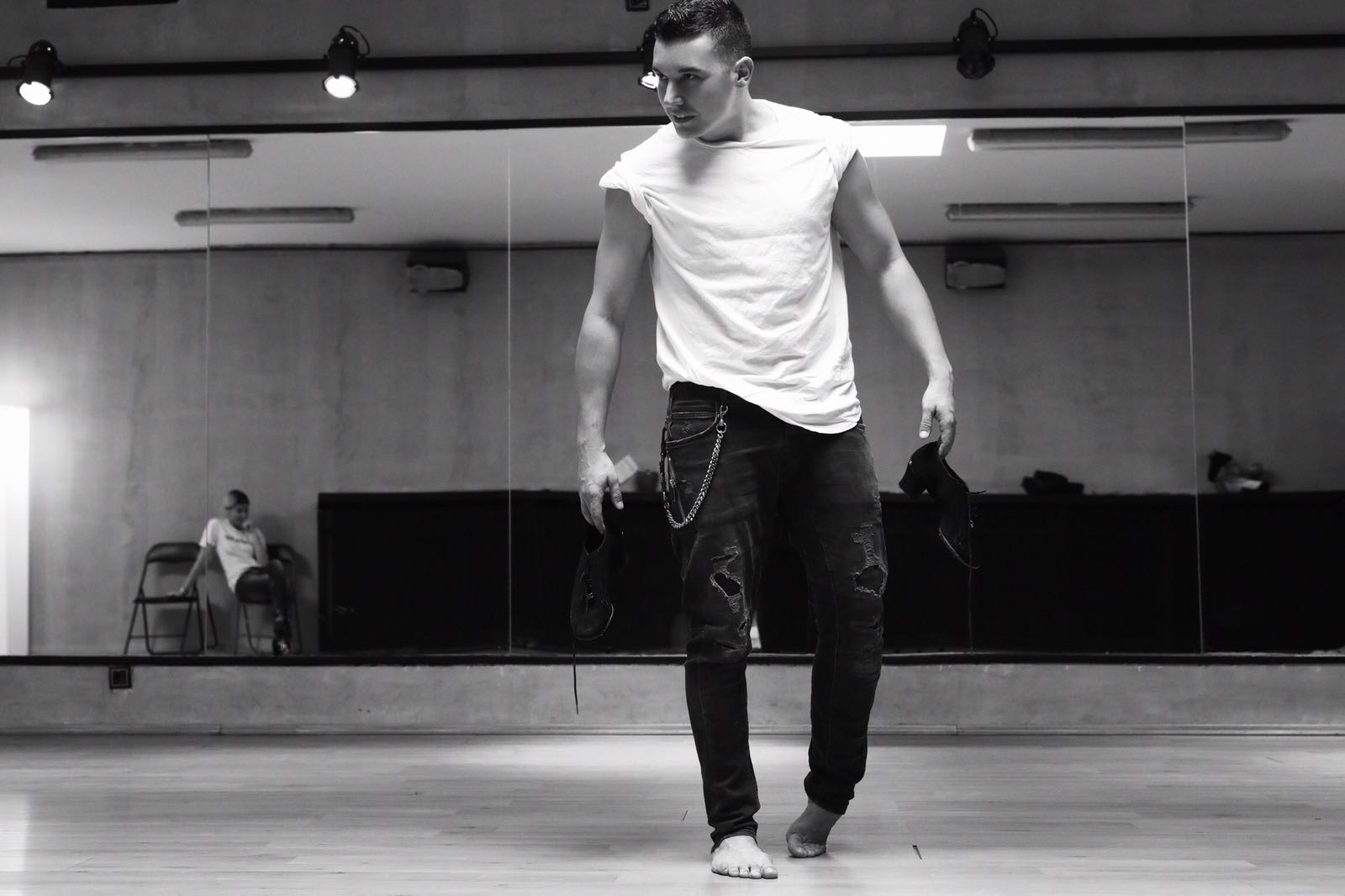
For some, it’s music.
Rhythm.
Freedom.
A night out.
Something that gets you moving, carries you away and clears everything else from your head.
For others, it’s the complete opposite.
An obligation.
Rules.
Steps to remember.
The awkwardness of not knowing what to do with your hands.
A partner you need to follow.
A mirror in front of you.
And perhaps the hardest part — stepping out of your comfort zone.
Both are true.
Perhaps that’s exactly what makes dance so interesting.
It can be freedom and discipline.
Fun and serious work.
Something completely natural, but also something that asks you to learn to use your own body in a way you never have before.
After so many years in the studio, that combination is perhaps what I love most about it all.
Because when you dance, it isn’t just your body at work.
Your mind is working too.
Much more than it might seem at first.
While you dance, you change direction, shift your weight, keep your balance and control your arms, legs, posture and breathing.
At the same time, your mind follows the music, remembers what comes next, takes in the space and responds to your partner or the group.
And it all happens at once.
That’s why I often say dance is one of those rare activities where you can’t really switch off your brain and just go through the motions.
You have to be there.
Present.
You don’t need to know how before you turn up
People very often say:
I have no rhythm.
It’s not for me.
I’m too stiff.
It’s too late for me.
I’ve heard that all my life.
And it always makes me smile, because nobody says, ‘I won’t start going to the gym because I’m not strong yet.’
Of course you aren’t.
That’s why you start.
It’s the same with dance.
You don’t come because you already know how.
You come to see how your body responds to something new.
Some people will pick it up quickly.
Others will need more time.
Some will fall in love with it straight away.
Some perhaps never will.
And all of that is perfectly normal.
Dance doesn’t have to lead to a competition, a stage or a medal.
Sometimes, simply enjoying the fact that you got moving is enough.
The body works, but so does the mind
What I particularly love about dance is that it’s never only physical.
You learn a step.
But you’re not just learning a step.
You remember the sequence.
You listen to the music.
You try to find the right moment.
You think about where you are in the space.
If you’re dancing with someone, you have to tune in to them too.
Without pulling.
Without falling behind.
Without rushing.
Sometimes leading.
Sometimes letting go.
And suddenly you realise you’re doing far more than you thought.
So it doesn’t surprise me at all that dance is increasingly being researched in relation to balance, coordination, mobility and cognitive function.
Because when you look at what a person actually does while dancing, it makes perfect sense that both body and mind are at work.
Then there’s what you can’t quite measure
Perhaps this matters most to me.
People often arrive at class carrying all sorts of things.
Work.
Phone calls.
Messages.
Responsibilities.
Stress.
Who knows what else.
Then the music starts.
And for that hour, you have to be there.
You can’t really have five other conversations in your head while trying to work out where your left foot is meant to go.
And somehow, it clears your head.
It doesn’t solve your problems.
Of course it doesn’t.
But it gives you a break from them.
To me, that’s a huge thing.
And very often, you can see the difference between how people walk into the studio and how they leave it.
Tired, yes.
But somehow lighter.
And then there are the people
Something else I’ve come to appreciate more over time is the social side.
These days, you can spend a whole day surrounded by people without really being with anyone.
That’s a little harder in a dance class.
You have to look at someone.
Listen.
Respond.
Make a mistake in front of them.
Laugh.
Try again.
And very quickly, many of the things we carry through the day fall away.
What car someone arrived in.
What they do for a living.
How much they earn.
What their status is.
In the studio, it very quickly comes down to something simple:
Can you hear the music and move together with someone?
I find that lovely.
Does dance replace every other kind of exercise?
No.
And it shouldn’t.
I don’t like turning anything into a miracle.
Strength training matters.
Walking matters.
Swimming, running, stretching — they all have their place.
But dance has one big advantage.
Many people don’t see it as an obligation.
And that matters a great deal.
Because the best workout in the world is no use if you hate it and give up after three weeks.
With dance, you often forget you’re actually exercising.
You came for the music.
For the company.
To learn something.
To step away from your day for a while.
And along the way, you’ve worked up a sweat, loosened up, used your mind, laughed and done something good for yourself.
To me, that’s a pretty good combination.
That’s why I think everyone should try it at least once
Not because everyone will love dance.
They won’t.
And they don’t have to.
But I think it’s good to give yourself the chance to feel what it’s like when your body and mind have to find a way to work together.
Without needing to be good at it.
Without comparing yourself to anyone.
Without thinking it has to lead to something.
Just to try.
Perhaps you’ll come for the music.
Perhaps for your fitness.
Perhaps because someone talked you into it.
And perhaps, after a few classes, you’ll realise that what you enjoyed most was something else entirely.
Being fully present for an hour.
And perhaps that’s what I love most about dance.
It gets your body moving, keeps your mind busy and somehow quietens everything else a little.
Journal
The conversation continues.
Share your experience or leave a question.
Loading comments…